
Working projects
These days, I study how international organizations navigate evolving global power dynamics -- such as the rise of China, emerging market economies , and authoritarian states -- focusing on the International Monetary Fund, World Bank, United Nations, and Asian Infrastructure Investment Bank.
Who Governs Matters: Member States' Regime Types and Public Support for International Organizations (with Hohyun Yoon)
How does growing influence of authoritarian states affect public support for international organizations (IOs)? We argue that influential member states’ regime type provides citizens with a cue for evaluating IO legitimacy in democracies. As democratic publics generally associate nondemocracies with opaque governance practices and illiberal interests, information that nondemocracies are gaining greater institutional influence in an IO may reduce public support for the affected IO. Across four survey experiments in two democracies--the United States and South Korea---focusing on two major IOs---the UN Security Council and the IMF---we find that democratic publics are generally less willing to comply with or remain in IOs when governance reforms are described as empowering authoritarian rather than democratic states. These findings have important implications for the future of institutionalized multilateralism amid the rise of authoritarian states.

The Geopolitics of Debt Sustainability Analysis (with Mengfan Cheng and B. Peter Rosendorff)
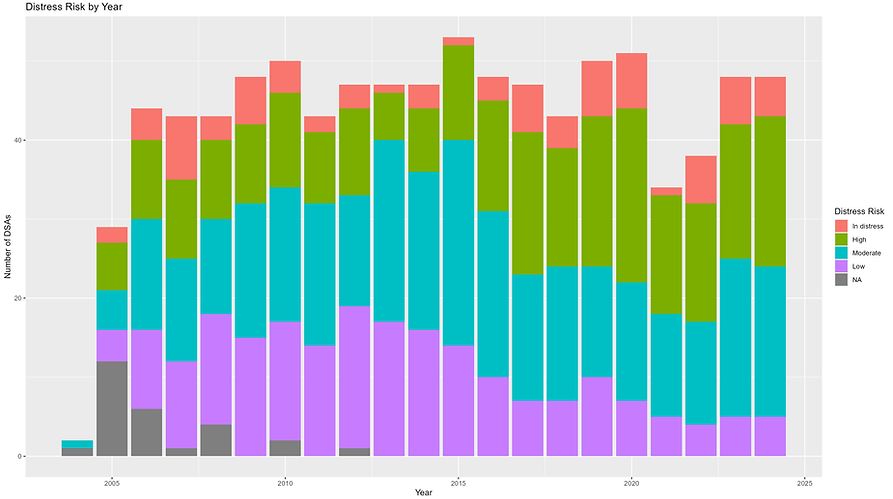
Are technical assessments by international financial institutions (IFIs) insulated from geopolitical influence? While existing research demonstrates that IFI lending decisions are shaped by geopolitics, it remains unclear whether their ostensibly technical activities are similarly affected. This paper introduces an original dataset of 1,013 IMF-World Bank Debt Sustainability Analysis (DSAs) for low-income countries between 2005 and 2024 -- highly technocratic reports that play a central role in sovereign debt governance. Using both UNGA voting similarity and foreign aid measures, countries with closer ties to the U.S. receive more favorable DSAs, with the strongest effect on textual tone, while relations with China had little systematic effect. Using the 2010 IMF governance reform as an exogenous shift in quota shares for both the U.S. and China, there is attenuation of these geopolitical patterns in ratings, tone, and forecast errors after the reform. The effects are more pronounced in the text where discretion rather than rules operates more freely. Geopolitical influence reaches into the production of technical assessments and shapes sovereign financing conditions.
Not Two Worlds: International Staff Mobility and the Asian Infrastructure Investment Bank (with Tuuli-Anna Huikuri)
China's creation of new international organizations has raised concerns that global economic governance will fragment into rival geopolitical blocs. We examine this possibility, focusing on the first decade of lending by the Asian Infrastructure Investment Bank (AIIB) spearheaded by China. Counter to the concerns about global division, we show that AIIB lending closely mirrors World Bank lending. We suggest that one important driver of this overlap is internationally mobile staff: the AIIB hires professionals with project management experience from established development institutions to benefit from their expertise. Utilizing original data of 196 AIIB project leaders' professional backgrounds, and interviews with AIIB staff, we find that former World Bank officials are well represented in AIIB project leadership, and these World Bank-experienced officials are more likely to lead subsequent AIIB projects in the country that they have previously worked on World Bank projects. Our findings suggest that staff mobility can facilitate institutional continuity even amidst geopolitical competition.
